Three · Four seasons
Spring · summer · autumn · winter — the turning of the year
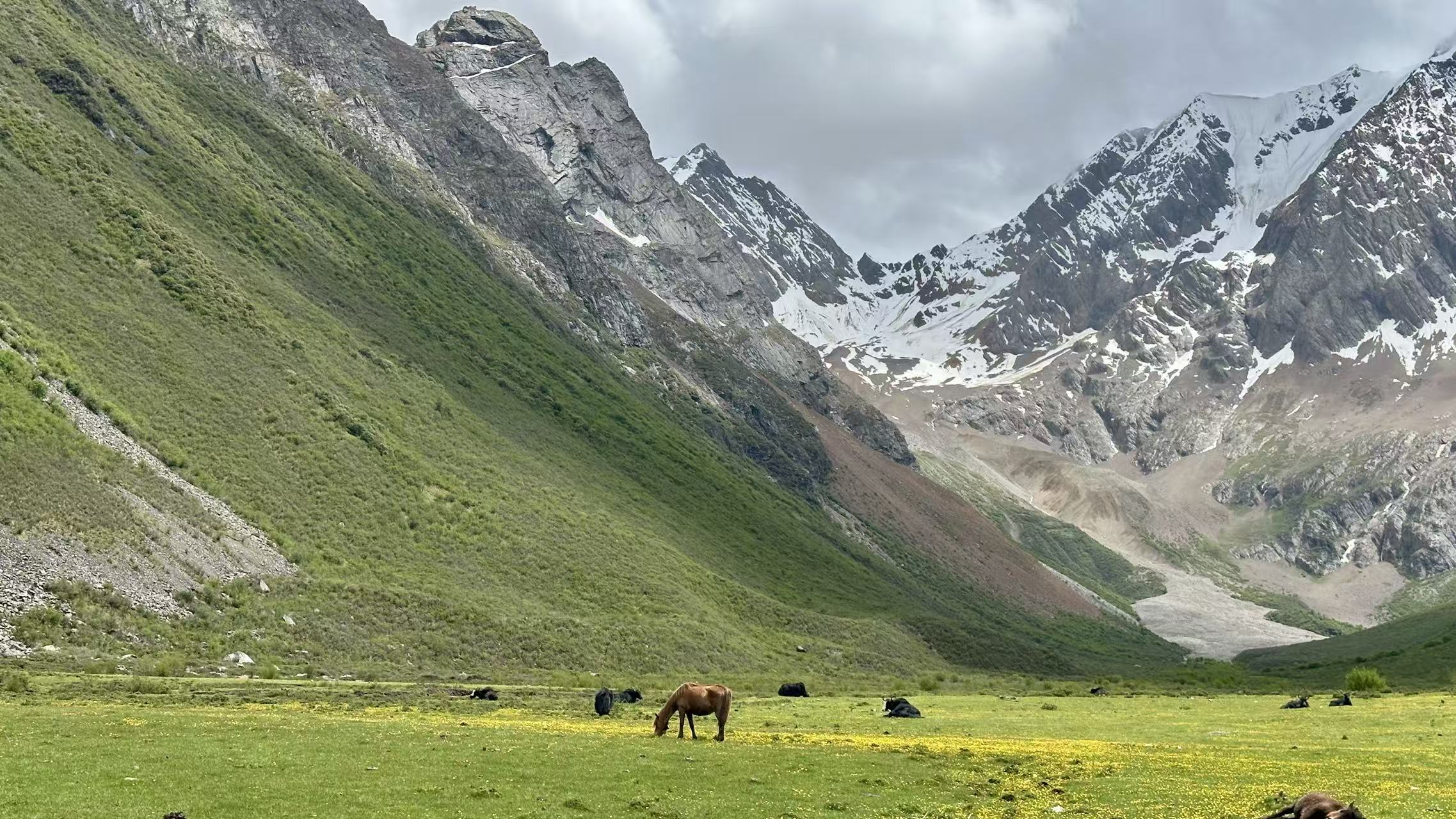
春 · Spring
接犊 · 挖草药 · 万物醒
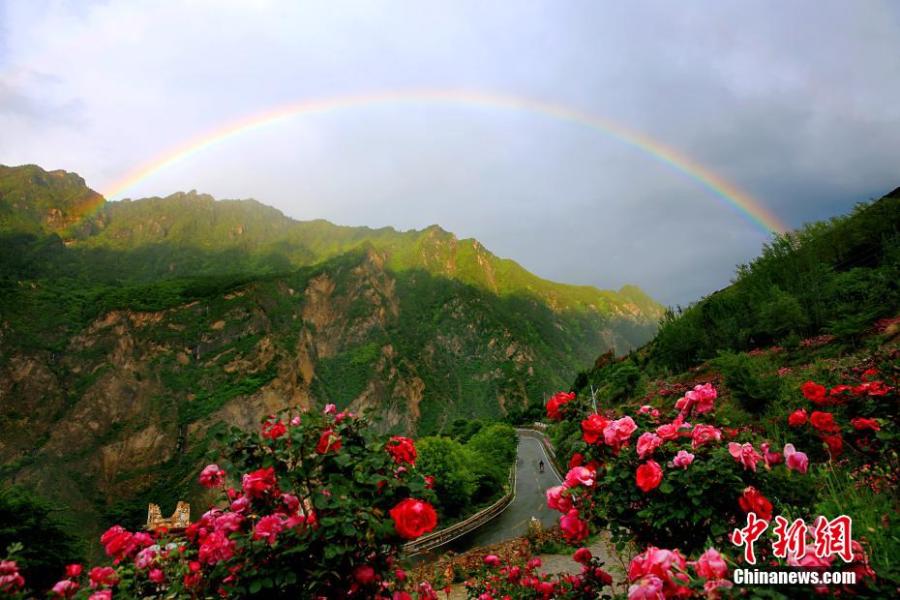
夏 · Summer
高山牧场 · 花海最美的季节 · 望果节
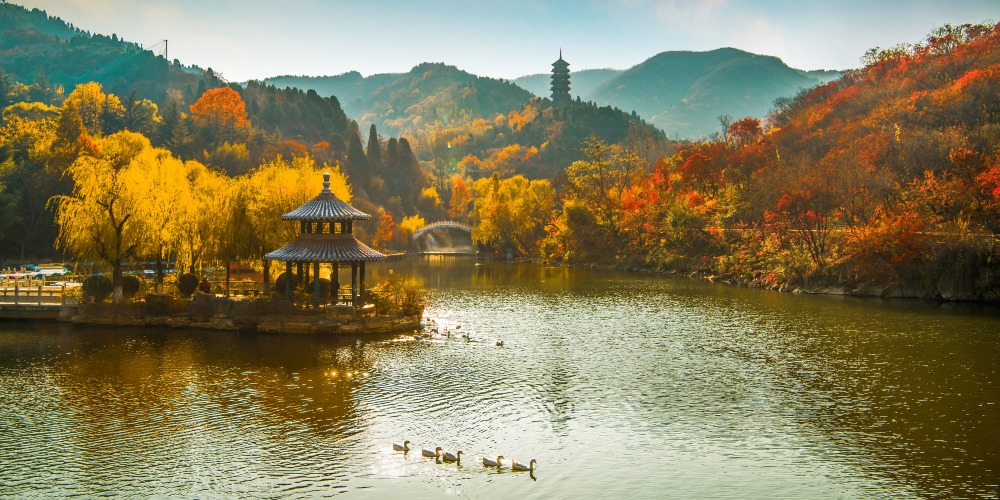
秋 · Autumn
漫山红叶 · 打草 · 藏历新年准备
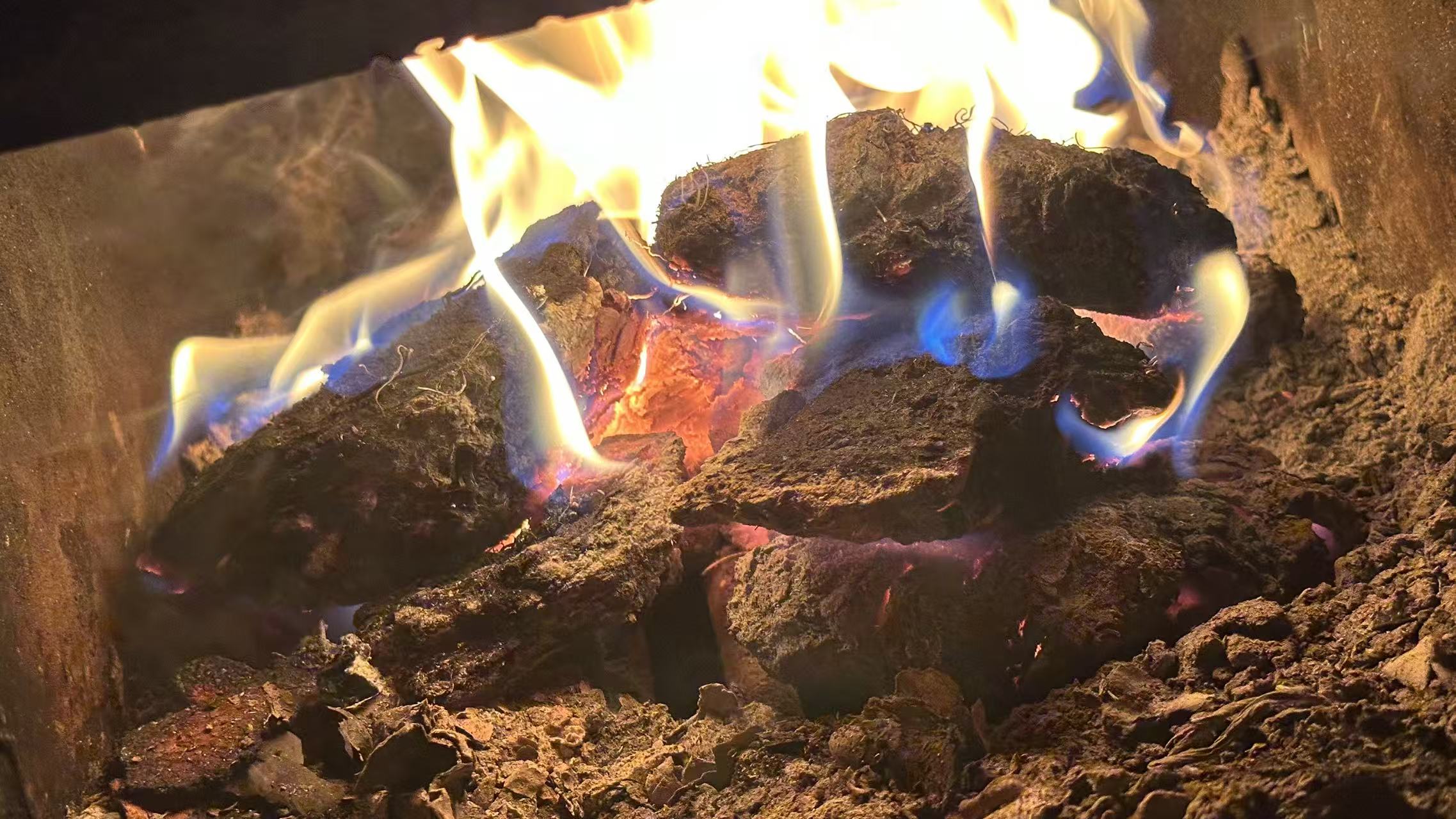
冬 · Winter
严酷但有生机 · 凌晨 4 点的牛粪火
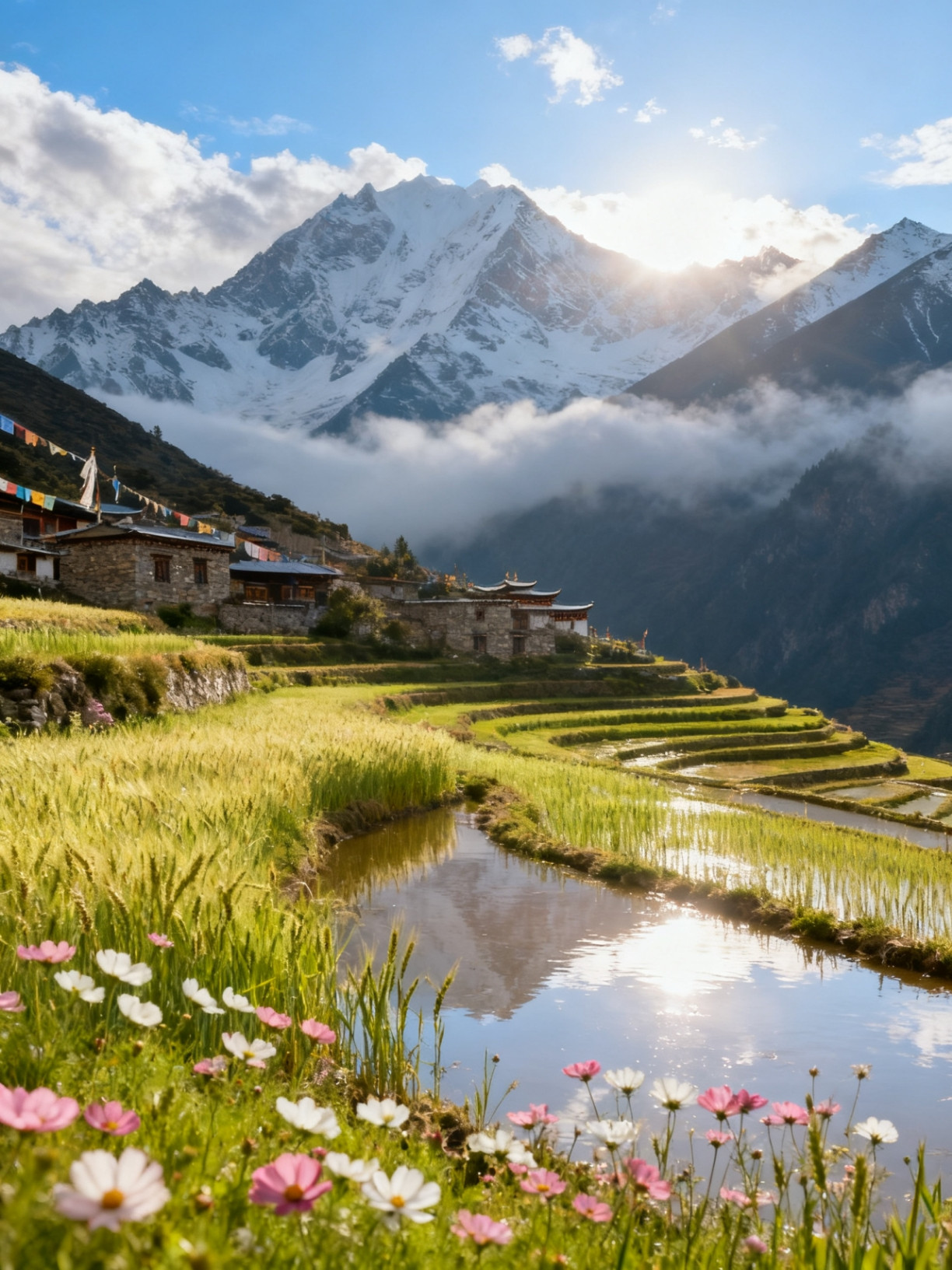
(Spring/Summer/Autumn 3 are web placeholders, waiting for Achuo's photos; Winter from user)
People who live on the land do not follow the clock. They follow the turning of the four seasons, the slow movement of light at dawn and dusk, the arrival of rain, the falling of snow — the way temperature and weather work, gently and gradually, on every living thing across the days.
Spring — the earth wakes, cordyceps is dug, the calves are born
April – June
Through the long winter, the word patience gradually — and perhaps forever — slips out of the language. Or perhaps it was never there to begin with, and humans only invented it during the long process of "evolution," out of urgency.
So when spring comes, it arrives as a kind of unlooked-for surprise. It comes slowly, in its own way, step by step. When the sun is out, the snow melts fast and the mountains are laid bare. In the early days the palette is still dark: near-black rock with a touch of white at the top, and a steady, deep green through the pines at the waist. Below, in the meadows and plains at lower elevations, people carry on with their quiet lives — having brought the yaks back through a stormy dusk of lightning and hail after a heavy snowfall, crossing back through the bitter cold, settling the cows and the calves, returning at last to the warmth of the stove and the family.
Life moves at an unhurried pace, like the stirring and growth of plants beneath the earth. Not until the exact season arrives, and the precious caterpillar fungus truly turns from bug to grass, pushing up through the soil by the length of a fingernail, do people set out together on a chosen day, into the mountains, for a brief but solemn lungta (龙达) ceremony to inform the mountain deities of their coming.
Cordyceps is one of the central sources of income for local residents. Through the whole spring, the snow and ice melt little by little, and what falls from the sky shifts, quietly, from snow to rain. The people are spread across the land and the hillsides, taking cold and mud in stride with no shelter. Hard and busy as the life is, it is as broad and as wild as the mountains themselves.
Because the market demand is constant, the high-plateau cordyceps is dug continuously. In recent years the yield has fallen far below what it once was, and since 2025, when cultivated cordyceps entered the market and pushed down the price of the natural kind, the income that local families earn from digging has dropped sharply.
This is also the season when the calves are born. A family with over a hundred yaks might welcome twenty to thirty newborn calves in the spring. To keep the calves alive, the herders make sure the mothers are eating well enough to hold their weight and stay in full milk, watch the calves' condition closely, dress them in little coats to keep them from freezing, and build a warm, clean, safe environment for them to grow in.
In the small, particular busyness of the season, people also witness the earth turning from yellow to green, the grass growing, everything coming back to life. The little calves grow with the season, bouncing as they run, and on the way back from pasture they always crowd up against their mothers to nurse, at any moment, with no concern for where they are. So along the grasslands, on the paths, by the roadside, you can see a cow stop to feed her calf, suddenly, in the middle of a step — a small picture of harmony and tenderness.
New life, busy days, quiet joy — these are the marks of spring, and a kind of gift that comes to people who follow the turning of the earth.
Summer — the herders move up, the mountain is picked, the meteor shower watches
July – September
Summer is the season of richest grass and brightest bloom around Manigango; everywhere the eye lands is full of flowers, life, and liveliness. It is also the busiest stretch of the pastoral year: the herders drive their yaks up the mountain in the seasonal migration, leaving the village and moving to the higher summer pastures to use the upper grasslands.
The migration starts at the beginning of July; a family typically stays at their summer pasture for about two months. In some places there is only one household — quiet, perhaps, but the family has a whole sky and a whole stretch of land to itself. More often, two or three families camp near each other, both for company and for help in a pinch. The traditional black tents woven from yak hair, or the white tents the government has distributed in recent years, are usually pitched in places so beautiful they feel like a city floating in the sky — graceful, hard to compare. Inside, the tent is roomy enough for a few folding cots, a steel stove for cooking and heating, a centrifuge for separating butter, and all the other tools of daily life — making the most of everything is in the bones of the people of the grassland.
It is the busy month for collecting milk, making butter and curd, and it is also something like the herders' summer festival. The whole family goes up; relatives and friends come to visit and take in the richness of the high country. Life radiates outward from the tent, into the open land. People ride motorbikes or horses to pasture, so used to the route that they may forget how much danger and challenge is in every trip up the mountain — which is also why the work is, in its own quiet way, brave.
The high plateau's gifts are gathered in this short stretch of high summer, and the whole family — men, women, old, young — goes out together. They dig fritillary, gather dandelion, rhodiola, and other herbs. They go out onto the grassland, into the alpine meadow, into the old forest, or up onto the higher scree slopes. There is hardship in it, but it is also a family's shared time in the open. It is not only about taking. On another level, it is a way of returning oneself to the land, so that people and the land can recognize each other, learn each other, and understand the loop between them: take only what is truly needed, and then, decades later, when a person dies, give the body back to the earth through water burial, earth burial, or fire burial — or, in the sky burial, feed the flesh to the vultures. It is still a return.
Tibetans believe that the mountains have mountain deities, and the land has its local earth gods. Even in a rich high summer, on a fasting day or on the commemoration day of a Buddha or Bodhisattva, going up the mountain to dig herbs, breaking the soil, or cutting wood is considered a grave offense to the mountain and earth deities and is believed to bring disaster. On those special days — such as the eighth day of the Tibetan month, the Medicine Buddha's day; the tenth, Padmasambhava's commemoration; the fifteenth, the full moon, when the blessing of all the Buddhas and Bodhisattvas is strongest and karmic effects grow fastest; and the thirtieth, the new-moon day, when the old moon ends and people do confession and purification — people hold strictly to the precepts of not killing and not eating meat, and they go to the monastery to circumambulate, light lamps, and offer water. People here believe that on these auspicious days, the merit of good deeds multiplies many times over, and so does the demerit of bad deeds (such as killing or damaging the environment). These customs are not just religious belief; they give the land and the herbs time to rest, and so protect the fragile high-plateau ecology.
The folk horse-racing festival and shuaba-zi (耍坝子) picnics also fall in this season. Travel with family or friends, and visits to monasteries, also happen mostly now. People's movements shift with the land's look and mood, becoming lively, supple, brisk — at exactly the right pace.
It is also the season of the Perseid meteor shower. The peak falls between August 12 and 14. On those nights, if the sky is clear and the moon is not too bright, lying on the open grassland and watching the sky — waiting for the Perseids' great, bright meteors with their green tails to streak across — is a very special kind of life experience. Watching the whole Milky Way, and the greater space beyond it, a person forgets the small self; every worry and every "I" naturally fades; and a person returns, just for a moment, to being a very, very small part of the universe.
Autumn — color across the land, and "autumn dung"
Late September to early October
Autumn is short — perhaps less than a month — and all the more intense for it.
The green recedes, and every color across the land shifts at once, leaving only the yellows, reds, purples, and oranges of the plants — dense, complex, hard to grasp, hard to describe. The great color blocks fall against the white of the snow mountains and the deep blue of the lakes, like a dream, like a place where the mountain gods live. Lift your head, walk a little way out of the town toward the hills, and the gifts of the maker are impossible to miss: streams, the gradient of colors in the turf, the yaks and sheep grazing, the scattered houses, the cooking smoke…
This slightly quieter season is also the favored time for weddings. Bride and groom, the relatives and friends who come from far and near, the prayer flags on the meadow, the white smoke from the juniper offering, the colors and smiles of the people in their best clothes — everything is lovely, easy to look at, and on an already rich autumn it becomes even more striking.
Because it is a pastoral land, there is no real "harvest" beyond the fodder fields cutting alfalfa for the coming winter. If one had to name an autumn harvest here, it would have to be — yak dung. The scene is still beautiful, all the same.
In Manigango, and across the pastoral lands of western Sichuan and the Qinghai-Tibet Plateau, the gathering of yak dung follows a strict seasonality. The autumn dung (often called qiufen, "autumn dung," in Tibetan) is generally considered the best fuel.
After a whole winter of use, by spring the yaks are losing weight and feeding on dry old grass; the spring dung is full of poorly digested coarse fiber and impurities, and burns at a low heat value.
In summer the grass is rich but the rain is also rich; the humidity is high and the dung dries with difficulty, going black and moldy. Hot, damp conditions are ideal for flies and parasites. If you collect in summer, the dung carries a heavy, sour smell, the smoke is thick when it burns, and the fire is poor.
Only in autumn, when the high-plateau grass has gone to seed and is at its nutritional peak, do the yaks eat grass rich in fiber and undigested seeds; what comes out is firm, dense, and burns hot and long. At this season, the high plateau is windy and the air is dry; freshly dropped dung laid on the grassland loses its water quickly and does not go moldy or rot as it would in summer. As autumn temperatures fall sharply, with night temperatures dropping below freezing, the fly eggs, parasite eggs, and various pupae in the dung are killed by the natural cold. So autumn dung, in storage and when burned, is far less likely to grow insects or smell bad than summer dung. In a land where no life is taken lightly, this matters especially.
The making and gathering of dung is a process that follows the rhythm of the land. In late summer and early autumn, the herders spread the fresh dung in thin layers on the grass, or pat it into flat cakes; in some areas a little grass is mixed in to add binding. The strong autumn UV and the dry wind do the drying and the natural sterilization. The dung laid out on the meadow sits through the early winter cold, which finishes the dehydration and acts as a natural "freeze-disinfection" stage. By December or January the dung is fully dry, hard, much lighter, free of smell, and free of insects. Then the herders, as a household or an extended family, go out together to collect: they loosen the dung that has frozen together with grass, soil, and snow, bag it up, or stack it into dung-walls, to serve as the main fuel for heating and cooking through the long winter.
It is a labor of stocking up heat for the whole long winter and the year to come, done together, in a kind of celebration, and even if the air is a little cold, the warmth in the body is more than enough.
Winter — the snow scene, the polar cold, and the warm heart
Mid-October to April
The high-plateau winter is grand, sharp, edged, an extreme white. If you love the unbroken sweep of snow mountains across the wide land, the black pine forests, the dark yaks, the disappearance of the human mark and the surfacing of the wild essence of the land — that kind of scene — then you will also love the plateau's winter.
Indoors, whether in a settled Tibetan house or in a herder's tent, the fire in the stove is never out. People burn yak dung or wood in a big steel stove for warmth, to boil water, to cook, and gather around it for every indoor task of the day.
Outdoors, the daily tasks — fetching water, fetching firewood, shopping, herding the yaks — carry, in winter, a doubled challenge of cold, and also a doubled weight of solemnity, or the special cold-season pleasure that belongs to winter alone.
A person may deliberately go out alone into the snow and ice, or with company, simply to look, or to do something a little wilder: slide across wild ice, ride a motorbike or a bicycle or a horse across the frozen surface, and put the body into the absolute purity of that open world.
Winter may be the most fitting season for soaking in the wild hot springs. When most of the running water is frozen and daily water use becomes a small struggle, the desire for, and the cherishing of, water is stronger than at any other time. So going out through the snow with family or friends to a spring that steams in the open land becomes a more suitable, more ritual kind of act. In the days before Tibetan New Year, every spring — out in the wild, or in a built room with private baths — becomes a busy place. People take turns; no one stays too long, leaving time for others to come and clean themselves.
Whether you have been out on errands, out roaming by yourself, or back from a soak in the spring, when you come home you find the stove still burning, like a small fire in the heart — giving off heat, giving off light, gathering in the winter day, all the more simple and bright for it.
Before the New Year, the big shopping is unavoidable: hundreds of bottles of drinks, a bright mess of candy, dried fruit, snacks — the coffee table is set full so that any visitor who drops in can be served at once. Eating and drinking is not really the main point; what matters is the warmth and the sense of plenty and sweetness in the air. The women of the house fry fresh mahua (twisted fried dough) in large batches, prepare the colorful fruits that stand for the harvest, and cover the living-room table. The men go out to hang new prayer flags at the monastery or on the hilltops, and burn juniper at the white stupa in the snow… On New Year's Eve, the whole family sits together for a special kind of dumpling soup: a small stone, a chili, a bit of wool, or a piece of charcoal is wrapped inside the dough on purpose; whoever bites into it has to spit it out in front of everyone, in laughter, to drive away the evil spirits, welcome the auspicious, and pass on a small philosophy of life. On the morning of the first day of the new year, the men of the household get up early, go out to the outdoor water source, light incense, hang prayer flags, lay out offerings, recite auspicious words; then they bring water back, place it on the altar, and use what is left to brew the first pot of tea of the new year. People believe the first bucket of water of the new year is the most sacred and the sweetest, that it can wash away the shadow and grime of the past year, and let one greet the new year clean and whole. After that comes the round of visits to family and friends, the gatherings — a kind of huddling for warmth on this remote, isolated land. In that gathering, the long icy winter is passed, the human-built fire melts the frozen ground, and slowly, the next spring comes.
Continue browsing
The other two angles
One · Wild environment
Wildness and nature
Snow peaks, glaciers, alpine pastures, deep valleys — more unnamed corners than named attractions.
See detailTwo · Local people
Our way of life and our philosophy of survival
Town days, nomadic life on the open range, religious rhythms, cordyceps and yaks — and the philosophy that holds it all together.
See detail